Service Operations

Rebuilding a laundry delivery platform around how the business actually ran.

An aging custom site had fallen behind the operation. The rebuild gave customers a clearer booking flow and gave the owner a system they could manage.

Service BusinessCustom WordPressBookings & Route ManagementLegacy Rebuild

The business

A South Bay laundry pickup and delivery service had been running for long enough that the business had evolved well past the website meant to support it. New routes, a more complex order flow, a service offering that had grown — and a legacy custom site that reflected none of it.

The site had been a reasonable build for its time. But reasonable for its time meant built around an earlier, simpler version of the operation. By the time this project started, the gap between what the website said and what the business actually did had become a daily problem.

The client could feel it most in order management. Keeping up with incoming bookings, tracking what was where, managing routes — the system made all of it harder than it needed to be. And on the customer side, a booking experience that didn’t match the real service meant friction at exactly the point where it hurt most.

TypeLaundry Pickup & Delivery
LocationSouth Bay, CA
Previous platformCustom .NET build
New platformCustom WordPress build
BuildBookings, orders, route management — solo

Before the rebuild

A site that had fallen behind the business — and a client who felt it every day.

Order management that fought the owner

Tracking incoming orders, managing status, coordinating routes — the legacy system made each of these harder than it should have been. The client had been working around it rather than with it. That kind of daily friction adds up.

A booking experience out of step with the service

Customers booking through a flow that didn’t reflect actual pickup zones or schedules encountered confusion the business had to resolve manually. Every order that got stuck in a gap between the website and reality was a cost.

A legacy platform with no easy path forward

The old .NET build had been maintained past the point where it made sense to keep patching. Changing anything required developer time. The business was too dependent on a system it couldn’t easily change.

The system had been built for an earlier version of the business. That version didn’t exist anymore.

How we solved it

Build around how the business actually runs.

Order Management

Before

The legacy system had aged poorly. The business owner found it difficult to manage incoming orders — tracking status, handling changes, keeping up with what was where. The system didn't reflect how the business actually operated day to day.

After

Full order lifecycle management with statuses, custom order notes per booking, and a gratuity system for drivers. Every order trackable from booking through delivery — without workarounds.

Booking & Route System

Before

An outdated booking flow that hadn't kept up with how the service had grown. Customers encountered friction — a process that didn't match the actual pickup zones, schedules, or the dual-slot nature of a pickup-and-delivery service.

After

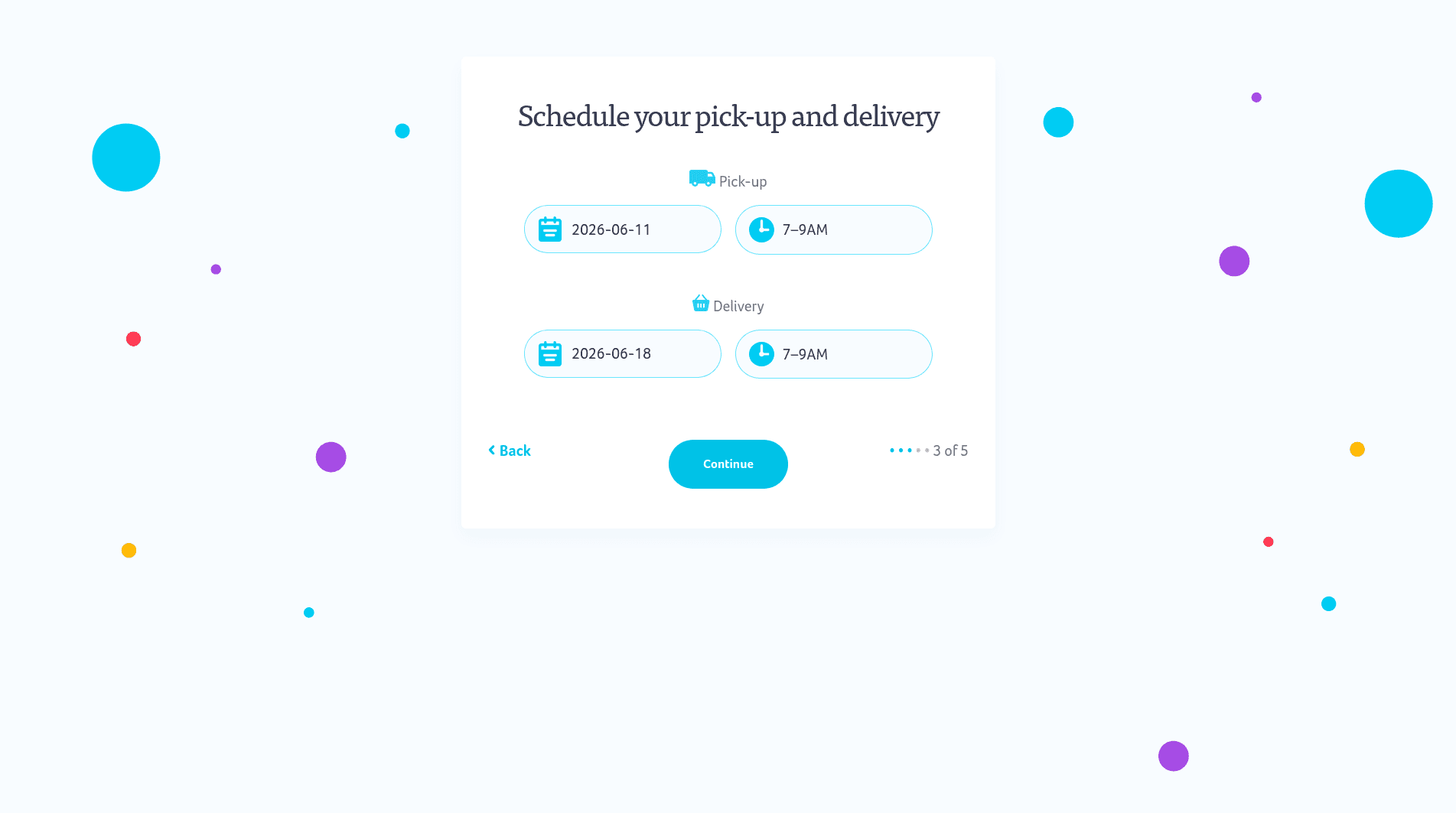
A dual booking slot system — separate pickup and dropoff time windows — tied to per-driver route mapping. Each driver's route was scoped to their assigned slots, so bookings fed directly into the right route without manual reassignment.

Platform

Before

A custom .NET site built for an earlier version of the business. Maintaining it required developer involvement. The operational complexity the service had grown into — routes, driver assignments, multi-slot bookings — had no place to live.

After

A custom WordPress build housing the full operation: bookings, order management, route tracking, driver assignments, and customer-facing features. Built to match how the service actually ran.

The work

Understand the real operation. Build to match it.

01
Learning how the business actually worked

The old site described a version of the service that no longer existed. Before writing a line of code, the work started with understanding the real operation: pickup zones, route structure, how orders moved from booking to delivery, and where the client was spending time managing things the system should have been handling. The gap between the old site and the actual business was the brief.

02
Building around the real workflow

A custom WordPress build, developed solo. The booking system used dual time slots — customers chose a pickup window and a dropoff window separately, which matched how the service actually scheduled its drivers. Each driver had their own route mapped to their assigned slots, so orders routed automatically rather than needing manual assignment. Order management included full status tracking, custom notes per order, and a gratuity option for customers to tip drivers. Everything the business was managing across workarounds and manual steps, in one place.

03
Result — orders came in

The customer experience improved significantly enough that order volume increased. When booking is easy and the service is presented clearly, customers complete the process. That's what happened. On the operations side, the client could manage orders directly — without workarounds, without calling a developer, without a system that fought them every day.

Results

Order influxAfter launchCustomer experience improvement drove more completed bookings
Owner-operatedOrder & route managementNo developer needed to manage day-to-day operations
Legacy replaced.NET → custom WordPressBuilt around current operations, not a previous version of the business

Start a conversation

Working on something similar?

If your current system no longer matches how your business actually runs, let’s talk. A real conversation about what you’re trying to fix — before any commitment.

ToDiana Lopezinfo@pixelswithin.comLos Angeles, CA 90404