The best software feels good because it removes work.
That's why I pay attention to Tally, a simple form builder on the surface.
I like products like Tally because they take weight off people.
They reduce the overhead, the second-guessing, and the small bits of work people end up carrying around all day.
If you run an established business, that matters more than whether the tool "looks modern." Is it making work lighter?
Keep reading to find out what that looks like in practice: fewer handoffs, less chasing, and less time spent holding the process together by hand.
Why you should care
Most established businesses don't wake up thinking, We need better forms.
They think about missed follow-ups, slow intake, duplicated entry, messy handoffs, customer frustration, and the creeping feeling that growth now requires hiring more people just to keep the same level of control.
That is why a form builder can be worth studying.
Every business eventually runs into the same question:
Are we going to keep hiring people to manage complexity?
You could. Or you could build systems that take some of that coordination work off your team by making information easier to capture, share, and route.
But what if the system doesn't carry its share?
This is the part I see over and over in established companies.
The old system still opens. The report still runs. The customer record still exists. Nothing is obviously broken. But everyone has learned to work around it.
That is friction: small, repeated moments where the business needs a human to carry work from one place to another.
Friction is a word I repeat a lot when engineering for my clients. It's like pushing a boulder uphill. It's the extra labor required to complete work that should have moved through the business cleanly.
One of my clearest examples was a commercial furnishings checkout where institutional buyers kept getting blocked by bad freight estimates. The old process depended on a carrier quote form that was separate from the checkout. The fix was a custom freight integration that pulled the real rate automatically, so buyers could complete the order without calling, waiting, or asking someone to reconcile the number.
The goal is to let software handle more of the complexity.
The best software removes trivial work by design
This is the real product lesson.
Tally lets you make a form, share it, and start collecting responses before the tool becomes a project. That is the lesson: good software shortens the distance between intent and outcome.
That's a product decision with economic consequences.
Because once you define the goal, a lot of work starts looking unnecessary.
"The goal of [an organization] is to make money."
The Goal by Eliyahu M. Goldratt and Jeff Cox
A team can build quickly and still build the wrong thing. Speed doesn't matter if the result creates more training, more support, more approvals, more cleanup, or more confusion.
Software works, in the business sense, when it changes the economics of the process.
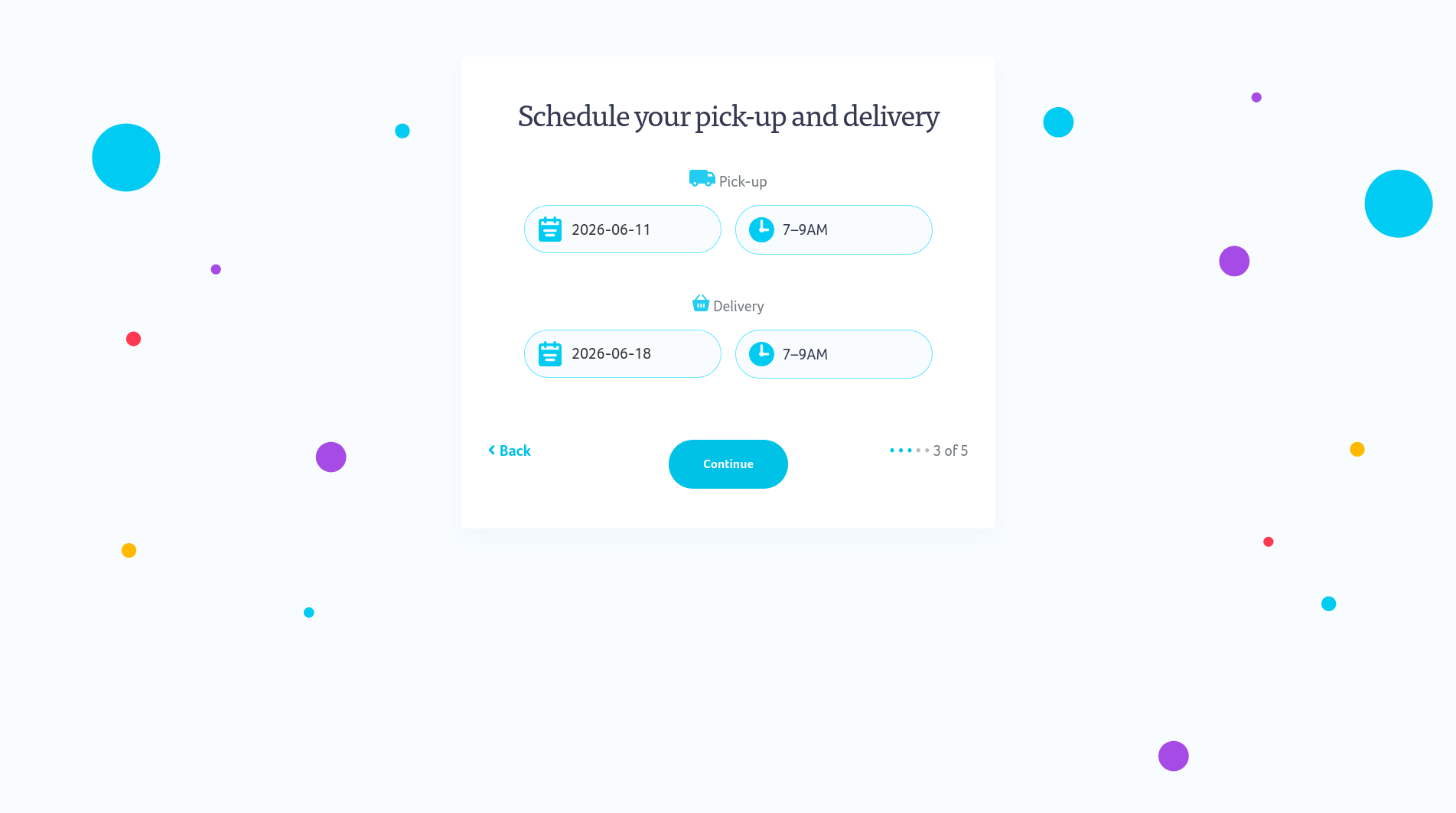
Case study: Laundry delivery platform
The work got lighter when booking, route assignment, and order management stopped depending on workarounds.
What if complexity is unavoidable?
Then I want to know exactly which parts of it are real and which parts we're adding by accident. These are the questions I come back to:
- What work disappears if we build this?
- What decision no longer has to be made?
- What handoff goes away?
- What does the customer no longer have to repeat?
- What does the employee no longer have to remember?
- What status question will nobody need to ask anymore?
- Can this step be removed instead of digitized?
Complexity itself isn't the enemy.
Valuable complexity is often the business. The expertise, compliance judgment, service nuance, relationships, and operational edge are real. What should go is the accidental complexity around it: duplicate entry, status chasing, unclear ownership, manual routing, and information trapped in inboxes.
That's the lesson I take from Tally. It made forms more useful by reducing the work around them.
A generous product is an engineering story
One reason I like Tally is that it feels unusually generous.
Its product and pricing pages make a simple promise: unlimited forms and submissions for free within fair-use limits, with paid plans for more advanced needs. It also describes itself as a small, independent, customer-funded team.
I read that as an engineering story.
Generosity isn't sustained by goodwill. It's sustained by systems.
A company can only afford to be generous if generosity is cheap to deliver.
That means business tools have to be:
- Self-serve
- Obvious
- Controlled
- Predictable
- Flexible
That logic applies far beyond forms.
If your business wants to serve more customers without adding headcount at the same rate, the better question is this:
What can we design so clearly that it stops requiring human management?
That could be intake, quote requests, approvals, order status, scheduling, compliance packets, document collection, reporting, or follow-up. Anything where your team is currently spending time chasing, checking, copying, correcting, or explaining.
The business gets easier to run when the system handles more of the work.
Less work, more business
I like Tally because it points toward a better kind of software company: focused, useful, generous, and clear about what it is trying to remove.
The bigger lesson is about what modern software should do for a business.
Less coordination. Less re-entry. Less chasing. Less remembering. Less work that nobody wanted to do in the first place.
That's what I mean by feel-good software.
Software that takes pressure off the business and the people running it.

This is what I do as a product engineer.
If this sounds like your kind of problem, reach out.